

Posted in Uncategorized

Lawyer 3.0: A Guide to Next-Wave Lawyering (Bristol University Press, 2025), is out! Please consider giving it a look and purchasing it if you are so moved: Amazon; Bookshop; and Bristol U Press.
I had the distinct pleasure of publishing a new piece with the Boston University Public Interest Law Journal entitled “Re-Rekindling the Spirit of Public Service: Institutional Fit and a New Lawyer Professionalism.” You can download it here. The admittedly long abstract is below. This work also digs into many of the themes I explored in Lawyer Nation: The Past, Present, and Future of the American Legal Profession (NYU Press, 2024).
In 1984, the American Bar Association embarked on an effort to “rekindle” a spirit of professionalism arguing the profession was failing to live up to what the organization’s leadership believed were its highest ideals. Just twenty-five years later, the ABA would create a new commission once again addressing the perceived lack of professionalism in the profession. More recently, as lawyers supported an effort to overturn the results of the 2020 election, and others have capitulated to demands of the Trump Administration that they refrain from challenging the Administration, it is causing many to, once again, question the professionalism of the profession. But complaints about the American legal profession’s lack of professionalism predate the formation of the nation itself and have resurfaced throughout the history of the nation—and the profession— ever since. Some of these criticisms of the profession include: that it serves wealthy clients at the expense of the greater community, that it is little more than a money-making trade, that it regularly fails to ensure access to justice for all who require legal assistance to solve their legal problems, that it has historically discriminated against many different populations, and that it has failed to defend democracy and the rule of law. Despite modest efforts at reform to address these criticisms over the years, the profession still faces significant challenges. Indeed, today the profession faces a range of criticisms and threats, including ones that echo many of these crises of the past. But the profession also faces another significant threat: the advent of new technologies that might displace many traditional lawyer jobs and perhaps create an even more deeply entrenched two-tiered system of justice. I submit that the criticisms over the years have often been, at their heart, arguments that the profession is failing to exhibit appropriate professionalism within a pluralistic, democratic society that is supposed to be governed by the rule of law. What is more, when the profession has instituted modest efforts to address its challenges, the reforms it has adopted have often failed to address the underlying issues and practices that led to those challenges in the first place. The reason for the inadequacy of these reforms is that they have been too-often animated by a “thin” version of lawyer professionalism. I argue here that it is a robust and multi-faceted professionalism that will help the profession rise to the challenges it faces at present. Not a “thin” version of professionalism focused on civility or skills training alone, but instead, a “thick” version of professionalism that goes beyond the bare minimum of what we can expect from lawyers to encompass far broader concepts. It is these latter concepts that I posit are necessary for the profession to find its way through the challenges it and the nation face at present, and those we will most certainly face in the future. Borrowing from new institutionalist scholarship in the environmental context, I will use the concept of “institutional fit” to chart out what should be the contours of this thick version of professionalism. Using institutional fit as a methodology helps to align ecosystems with the institutional arrangements that govern their management. Here, I will use this analytical tool to not just describe the legal ecosystem within which the American legal profession operates, but also to identify the appropriate professional institutional practices—the norms, habits, and behaviors—that align with the needs of this ecosystem to ensure it can function in a way that will secure not just the profession’s long-term viability and sustainability, but also the continued vibrancy of American democracy itself.
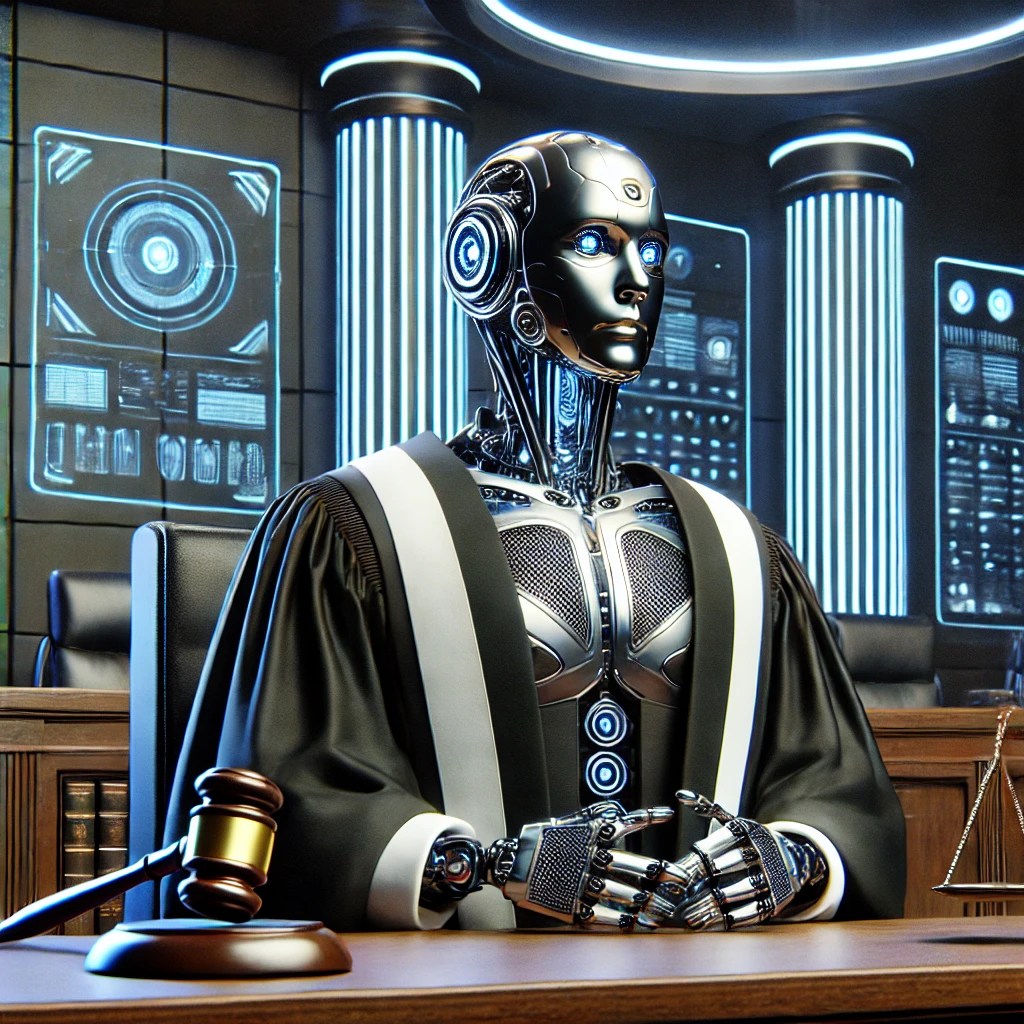
In two recent cases, one in Georgia and one in New Jersey, it appears that hallucinations from generative artificial intelligence have actually made it into judicial decisions. In the first case, an appellate court recently noted that in a divorce proceeding in Georgia, the trial judge cited fictitious cases supplied by one of the litigants in a final decree in the matter. In the second, in federal court in New Jersey, Judge Neals withdrew an order when it was brought to his attention that some of the quotations in the opinion, which were purportedly drawn from actual cases, cannot be found in the referenced opinions. He has not indicated whether that was a fault of generative AI but it seems highly likely. While we have seen case after case in which lawyers and pro se litigants have tried to pass off fictitious cases as genuine authority, these are the first (known) cases in which courts appear to have incorporated such sources in their work product. And when they do, like a sort of legal Pinocchio, they get transmogrified into actual legal authority. It is certainly the case that judges have at their disposal tools to punish lawyers and litigants who make baseless claims, but those tools are generic, and do not make explicit reference to the use of generative AI. At the same time, in an effort to make it clear the risks associated with using these tools, which can bring with it serious punishment, some judges and court systems have adopted specific rules and standing orders that address the improper use of generative AI, or ban it outright. Perhaps it is time for the adoption of some version of these rules in a more comprehensive fashion. I detail these standing orders in a recent piece published in the North Carolina Journal of Law & Technology, which can be accessed here.
Posted in Uncategorized | Tags: ai, artificial-intelligence, chatgpt, law, Technology

Like the last player chosen in the draft, it was a thrill to see my recent book The Private Is Political: Identity and Democracy in the Age of Surveillance Capitalism (NYU Press, 2025), listed (last) on Professor Daniel Solove’s list of over 400 “notable” privacy books published in the last 60 years or so. Although I was the last book listed, the books were in chronological order, so, that was comforting. Thank you, Prof. Solove, for the mention. You can see the entire list, Notable Privacy Books: A Journey Through History, here.
Posted in Uncategorized

In yet another case in which lawyers relied on flawed sources provided by generative artificial intelligence, U.S. District Judge William Matthewman of the Southern District of Florida issued an order in which he explained that “there is nothing inherently wrong with an attorney properly and competently utilizing AI…to practice law or litigate cases.” At the same time, he also noted that “evolving technology has many glitchesm,” emphasizing that “close and careful attorney supervision, fact-checking, and citation-checking are absolute necessities when utilizing AI or any of its subsets.” Because of these phenemona, Judge Crane found that lawyers “cannot delegate that role to AI, computers, robots, or any other form of technology.” This comes on the heels of U.S. District Judge Randall Crane of the Southern District of Texas issuing a standing order regarding the use of generative AI in his courtroom in which he cautions lawyers and pro se litigants “against submitting to the Court any pleading, written motion, or other paper drafted using generative artificial intelligence (e.g., ChatGPT, Harvey.AI, generative AI services) without checking the submission for accuracy as certain technologies may produce factually or legally inaccurate content and should never replace the lawyer’s independent legal judgment.” Given the frequency with which these hallucinations are appearing in legal filings across the country, one can expect more judges to issue these sorts of orders. I have written about many of these judicial orders in the North Carolina Journal of Law & Technology, which range from the sort of caution that Judge Crane has advanced, all the way to outright bans on its use. You can read that piece, New Governance and New Technologies: Creating a Regulatory Regime for the Use of Generative Artificial Intelligence in the Courts here.
Posted in Uncategorized

In a recent piece that is forthcoming in the Nevada Law Journal Forum, I lay out the First Amendment arguments against the Trump Administration’s Executive Orders seeking to punish law firms. Here’s the abstract.
This Essay explores the Trump Administration’s unprecedented campaign targeting major U.S. law firms for retribution and examines such actions in light of First Amendment’s relationship to these actions. Drawing on historical and doctrinal analyses, the Essay introduces and defends the concept of “legal speech” as a critical cluster of First Amendment protections encompassing the rights of lawyers to speak, associate, petition, and advocate on behalf of clients in an unfettered way and without government retaliation. Executive actions against Covington & Burling, Paul Weiss, Perkins Coie, WilmerHale, Jenner & Block, and Susman Godfrey purport to revoke security clearances, bar access to federal buildings, review hiring practices, and even penalize third-party clients doing business with the federal government—all in apparent response to these firms’ litigation stances, pro bono activities, and affiliations with political adversaries of the President. The Essay situates these actions within a larger historical, constitutional, and legal framework by tracing the doctrinal roots of legal speech through landmark Supreme Court decisions, including NAACP v. Alabama, NAACP v. Button, In re Primus, and Legal Services Corp. v. Velazquez, which collectively establish that legal advocacy—especially litigation aimed at advancing civil rights and challenging government action—is constitutionally protected expression. The Essay further analyzes how the Administration’s actions mirror past attempts by government to suppress disfavored speech through indirect pressure on third parties, a tactic the Supreme Court unanimously condemned in NRA v. Vullo as recently as May of 2024. The Essay also chronicles how some firms capitulated to administrative pressure without a formal Order issued against them, engaging in what historian Timothy Snyder describes as “anticipatory compliance,” further raising alarm about the erosion of rule-of-law principles. Ultimately, this Essay argues that these Executive Orders constitute clear content-based restrictions on legal speech and are therefore unconstitutional.
A prepublication version of the Essay is available here. Comments welcome.
Posted in Uncategorized | Tags: constitution, history, news, politics, supreme-court
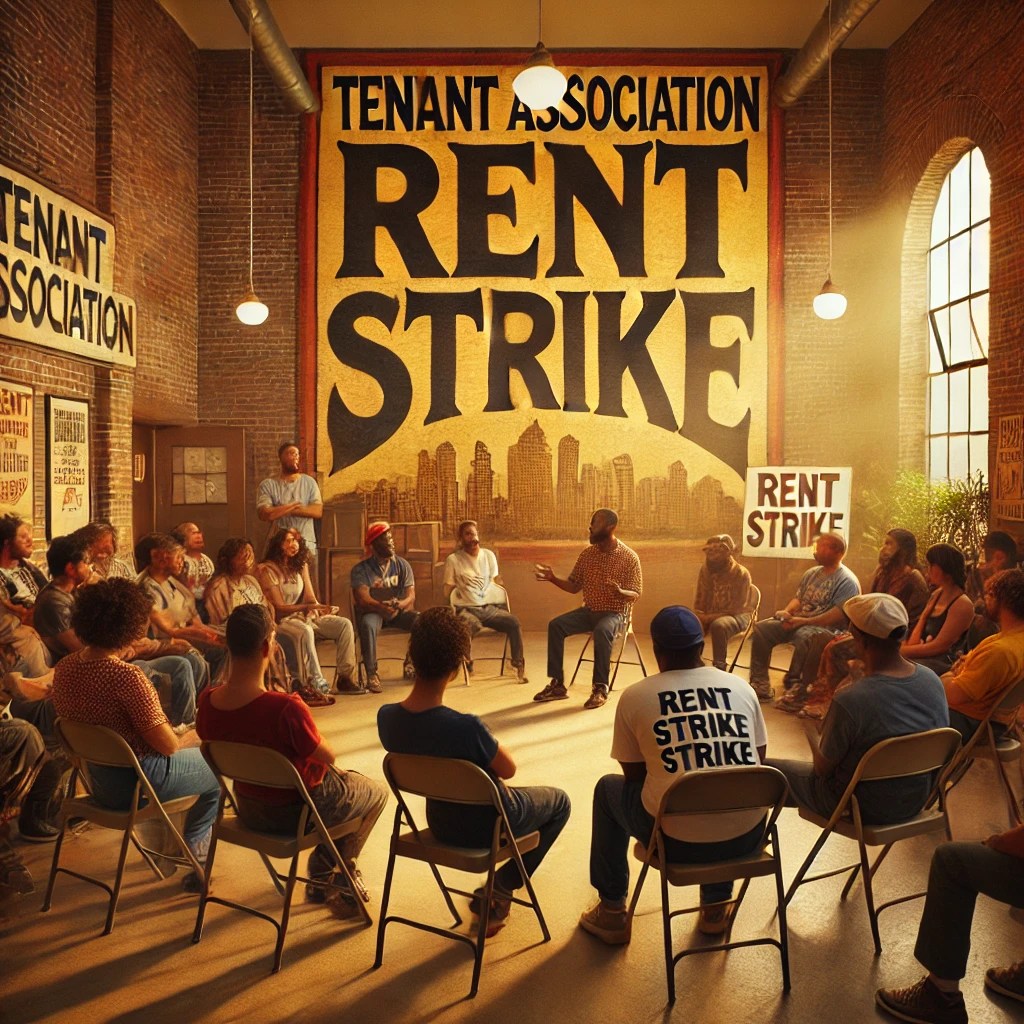
I’m very excited to announce that my recent piece, The Method Is the Message: Movement Law and the Social Change Commons has been published in the most recent issue of the Dickinson Law Review. This one was a labor of love because it describes in detail one of the great experiences of my career: working with a particularly strong, engaged, and engaging tenant association in Upper Manhattan in the early 1990s. Here’s the link to the article on SSRN. Abstract below. Feedback welcome.
Legal scholars have long sought to understand the relationship between social movements and the law. A new group of such scholars has argued that to better understand this relationship, and to advance social change that is effective, sustainable, equitable, and just, they must engage in dialogue with such movements to generate ideas that will catalyze that change. For those interested in generating ideas that can spark meaningful and lasting social change, such developments in legal scholarship represent an exciting evolution in the relationship between legal scholarship, legal scholars, and social movements: a relationship that appears to be growing stronger, deeper, more integrated, and more complex. At the same time, a different body of socio-legal scholarship, that which focuses on production of culture, assesses the institutional and normative environment in which such ideas are produced, looking at the financial and other incentives necessary to do so. The co-creation of ideas in the social change space represents, in many ways, the production of cultural phenomena (how to frame a particular injustice, the prefigured imaginings of what justice could look like, and the tactics and strategies necessary to realize that vision of justice). Yet creativity and ideation in this space are different from the typical context in which cultural artifacts are produced; social change requires a different approach; different logics; and a different understanding of how to incentivize, foster, and nurture co-creation. This work identifies the environment necessary for the co-creation of ideas that will advance social change that is just, effective, and durable as what is called in the literature a commons. A commons generally requires a particular set of institutional arrangements in order to flourish. As a commons, those who would operate within it can learn from the lessons of effective common-pool-resource management to understand the institutions that typically lead to positive outcomes in such settings. This is the first Article to identify the social change space as a commons, and then to analyze the functioning of that commons to identify the norms and institutions that foster effective cultural innovation in such settings.
Posted in Uncategorized | Tags: movement-law, movement-lawyering, Social Change, social movements, tragedy-of-the-commons

In Season 4, Episode 1 of Succession, media mogul Nan Pierce, played by the incomparable Cherry Jones, is entertaining competing and escalating bids by the generational factions within the Roy clan. Knowing she can play both sides against each other almost without end, she feigns naiveté, wondering out loud: “Different people saying different numbers. Eight, nine. What’s next?” Sensing her opportunity, she intends to seize it. After obtaining significant concessions from the law firm Paul Weiss, President Trump is continuing his revenge tour against law firms that he feels have slighted him in the past. Like Nan Pierce sensing an opportunity, unless law firms resist him, these demands will not end. Not for those newly in his sights, and not for any that bend the knee.
President Trump’s gaze is now fixed on WilmerHale, the law firm that once employed former FBI Director Robert S. Mueller III (of the Mueller Report from Trump I). Another firm, Skadden Arps, appears like it has gone the road of obeying in advance, seeking to cut a deal before the President comes for it. Law firms are clearly caught in a collective action problem. They are strongest if they refuse to bend the knee. But if there are defectors, it will likely cause others to want to capitulate as well.
What is more, the conventional wisdom seems to be driving these firms to cut deals with the Administration for fear they will lose clients. But what if the conventional wisdom is wrong? What if the Administration, like the fictional Nan Pierce, gets the sense that, if it can get law firms to capitulate now, what else can it ask for? What other concessions can it try to exact down the road? No bully backs down once they sense weakness. Rather, it only encourages them to go after you again, and again, and again. And that sense that clients will prefer a lawyer who will back down doesn’t square with what most clients want from their lawyer. Indeed, lawyers are supposed to advocate for their clients against government overreach, not give into it. As I try to explain in a recent piece in Bloomberg Law, there is a business case for resisting such overreach, which should be at the core of the profession’s values. And exhibiting such values is what should attract clients, not repel them. Give it a read. See what you think. Comments welcome.
Posted in Uncategorized | Tags: donald-trump, history, news, politics, trump
The Private Is Political: Identity and Democracy in the Age of Surveillance Capitalism comes out in early January 2025. Here is an excerpt from the recently released Kirkus review, which it calls a “farsighted book that portrays the devastating consequences of unfettered surveillance capitalism”:
Brescia explores in depth the different ways that “laws, norms, constitutional protections, and practices” surrounding political privacy “essentially provide immunity to those companies that have access to our digital selves [and] creates a form of moral hazard in which those same companies are largely free from oversight and responsibility.” But he does believe there’s hope if we follow the patterns of past successful civil rights movements, where there was a gradual convergence of understanding—coming from disparate groups of legislators, lawyers, academics, activists, and industry tycoons—that for democracy to thrive, it must protect and never again “extract” the teeming private selves at the heart of it.
Read the whole review here. And please consider pre-ordering on Amazon now here!
Posted in Uncategorized | Tags: democracy, politics, privacy, Social Media, social movements, Technology

 the Future of Change