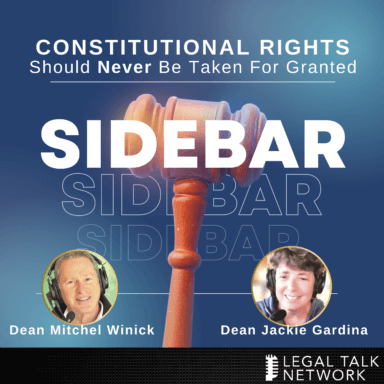
It was my great honor to sit with Mitch Winnick and Jackie Gardina for their Sidebar Podcast. Here’s a bit of a preview. Perfect listening for Election Day!
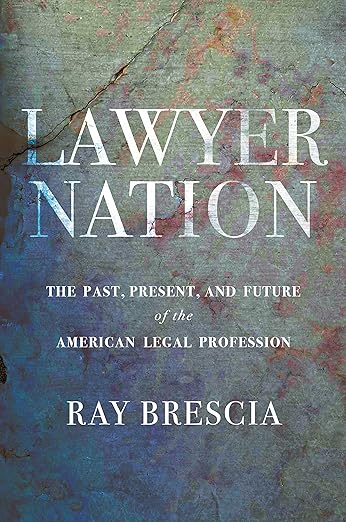
Since colonial days, the legal profession has been proud of its role in the founding of the republic, the adoption of the U.S. Constitution, and the defense of democracy and the rule of law. However, the profession faces an existential crisis on which the American democratic experiment hinges, says law professor Ray Brescia, author of Lawyer Nation: The Past, Present, and Future of the American Legal Profession. If attorney unethical behavior surrounding the 2020 election repeats without disciplinary repercussions in 2024 . . . democracy itself is at risk.
I am pleased to report that my new book, The Private Is Political: Identity and Democracy in the Age of Surveillance Capitalism (NYU Press), is available now for pre-order on Amazon here or wherever you get your books. In it, I try to highlight the importance of political privacy to democracy, explore the current threats to it, and suggest ways to protect it. I think it’s a good and compelling read. I hope you will think so too.
In a forthcoming piece in the North Carolina Journal of Law & Technology, I document developments in the federal courts where individual federal judges and court systems have issued rules pertaining to the use by litigants of generative artificial intelligence in pleadings. I also frame these developments as bearing resemblance to the elements of what a regulatory apporach known as New Governance Theory. Since, in many respects, courts have been some of the first institutions that have had to deal with the potential harmful ramifications of generative artificial intelligence, these efforts may help to provide some guidance in other areas where such technologies might produce a range of adverse impacts. A draft of the work-in-progress is available now here. Since it is a draft comments are welcome. Here is the abstract:
The wide availability of generative artificial intelligence led at least some to predict the rapid demise of many different professions, including the legal profession. But even as developers introduce newer and newer versions of this technology, and as its use has become more and more widespread, the reports of the demise of the professions, most notably for my purposes here, the legal profession, have been, to paraphrase Samuel Clemens, greatly exaggerated. Highly publicized instances of the technology functioning poorly have resulted in pleadings and other legal filings containing fictitious cases and legal authorities. Courts have sanctioned both lawyers and pro se litigants who have relied upon what have come to be known as generative artificial intelligence’s hallucinatory outputs in their filings before such courts. But at least some courts have determined that it is not sufficient to rely on ex post sanctions alone to punish those who might improperly rely on the outputs of generative artificial intelligence (GenAI). Indeed, some individual judges as well as judicial systems have found it appropriate to issue standing orders and local rules that serve as ex ante methods designed to prevent the improper use of GenAI tools; these orders serve as complements to the mechanisms available to judges to sanction litigant misconduct after the fact. This is the first Article to describe these ex ante rules and compare the different ex ante approaches to the ex post mechanisms already available to judges who wish to prevent, punish, and rein in conduct infected by GenAI hallucinations. In addition to providing an analysis of these judicially created ex ante rules that represent a departure from the more established methods that have historically been made available to judges that enable them to punish improper litigant conduct, this Article will also situate the development of these ex ante rules within the field of scholarship addressing regulatory matters often referred to as New Governance Theory. I will show how these innovative, decentralized, and experimental judicial approaches in the context of providing some guidance to and oversight of litigants utilizing GenAI exhibit many of the features of New Governance methodologies in their efforts to regulate certain types of behavior judges hope to discourage and prevent. What is more, I will argue that as GenAI continues to play a larger role in the work of the legal profession in general and in litigation particular, it is just these sorts of New Governance approaches that will help usher in an era of effective, efficient, and ethical uses of GenAI in litigation, but also holds out the possibility of providing a roadmap for its effective, safe, and lawful use in other areas as well.
In my forthcoming piece in the Fordham Urban Law Journal, I take on the question of how artificial intelligence might expand access to justice, with a particular focus on consumer debt litigation. You can download a draft here. Comments welcome. Here’s the abstract:
With generative artificial intelligence’s wide release in early 2023, many have expressed fears that this technological innovation might relieve humans of the burden of carrying out some repetitive and simple tasks, and possibly cost at least some of them their livelihoods. It also raised the specter that this and related technologies could end up displacing even workers engaged in creative works and certain professions, including those in the legal profession. The initial burst of enthusiasm surrounding the availability of generative artificial intelligence (GenAI) to the public—including members of the legal profession—was quickly dampened, however, when lawyers began relying on the work product of this technology to aid them in preparing legal documents, with rather unfortunate results, including lawyers being the subject of sanctions orders by judges for submitting documents with GenAI “hallucinations”: instances where the technology “found” authorities for legal propositions where no such authorities existed, and upon which those lawyers relied to their detriment. Given these and other experiences with GenAI proving unable to satisfy even the most basic standard of care that lawyers must meet when serving clients, the initial excitement that this technology engendered receded, yet lawyers and technologists have continued to explore ways to harness the technology to make the work of members of the legal profession more efficient and effective, while also ensuring that lawyers are able to uphold their ethical obligations even when they deploy new technologies to attempt to address the legal needs of their clients. While GenAI and other, related technologies, like machine learning, might play some future role in displacing some—if not many—of the functions the legal profession currently fills, the introduction of these new technologies might serve to address legal needs where the legal profession is currently failing to do so. That is, GenAI, if deployed effectively in certain underserved areas of legal need, does not run the risk of displacing lawyers where few lawyers currently serve clients in need. What is more, in at least some areas where lawyers are failing to address the legal problems of those in need, in many such cases, those legal needs call for interventions that GenAI is quite well-suited to execute: highly repetitive tasks, at scale, involving problems of relatively low complexity, and possibly even relatively low stakes. One such area is consumer debt. In the United States, millions of Americans of low- and moderate-income are sued by entities for relatively small amounts of money—ranging from $5,000-10,000. Many of the plaintiffs in these cases are “debt buyers”: entities that have paid a very small percentage of the face value of the debt for the right to try to collect it, and they use the courts as their primary vehicle for doing so. The overwhelming majority of those creditor-plaintiffs are represented by counsel, whereas only a tiny fraction of the debtor-defendants have legal representation. The nature of these cases lends itself to the creation of technology-driven interventions, fueled by GenAI, to help provide some legal guidance, support, and perhaps even the preparation of formal pleadings, to assist such debtors to defend themselves in court. This Article explores the theoretical, technological, ethical, and practical challenges associated with creating a GenAI-powered intervention that might help address the significant asymmetry of legal representation and assistance in consumer debt cases. Through such an exploration, it will identify the opportunities and risks of developing such tools to help close the justice gap more broadly, in this and other areas of law where the nature of the dispute might lend itself to this type of intervention. It will also identify areas of further research and inquiry as the legal profession strives to not just adapt to, but also harness, the introduction of GenAI into the practice of law in ways that are effective, while also ensuring it will serve the broader goal of the profession, which should be to expand access to justice and do so in ethical, equitable, and meaningful ways.
Please consider joining us the evening of April 16th for a fun book party to celebrate the release of Lawyer Nation: The Past, Present, and Future of the American Legal Profession! Hear about the book Melissa Murray calls “essential reading for lawyers and those who believe in the rule of law,” and what Jennifer Taub dubs “a timely and engaging book” that is a “must-read for practitioners and academics who are training the next generation of lawyers.” Oh, and there’s free CLE too! The event will be in-person and virtual, with an opportunity to purchase the book through the law school. Please register here if you’re interested. Hope to see you there!
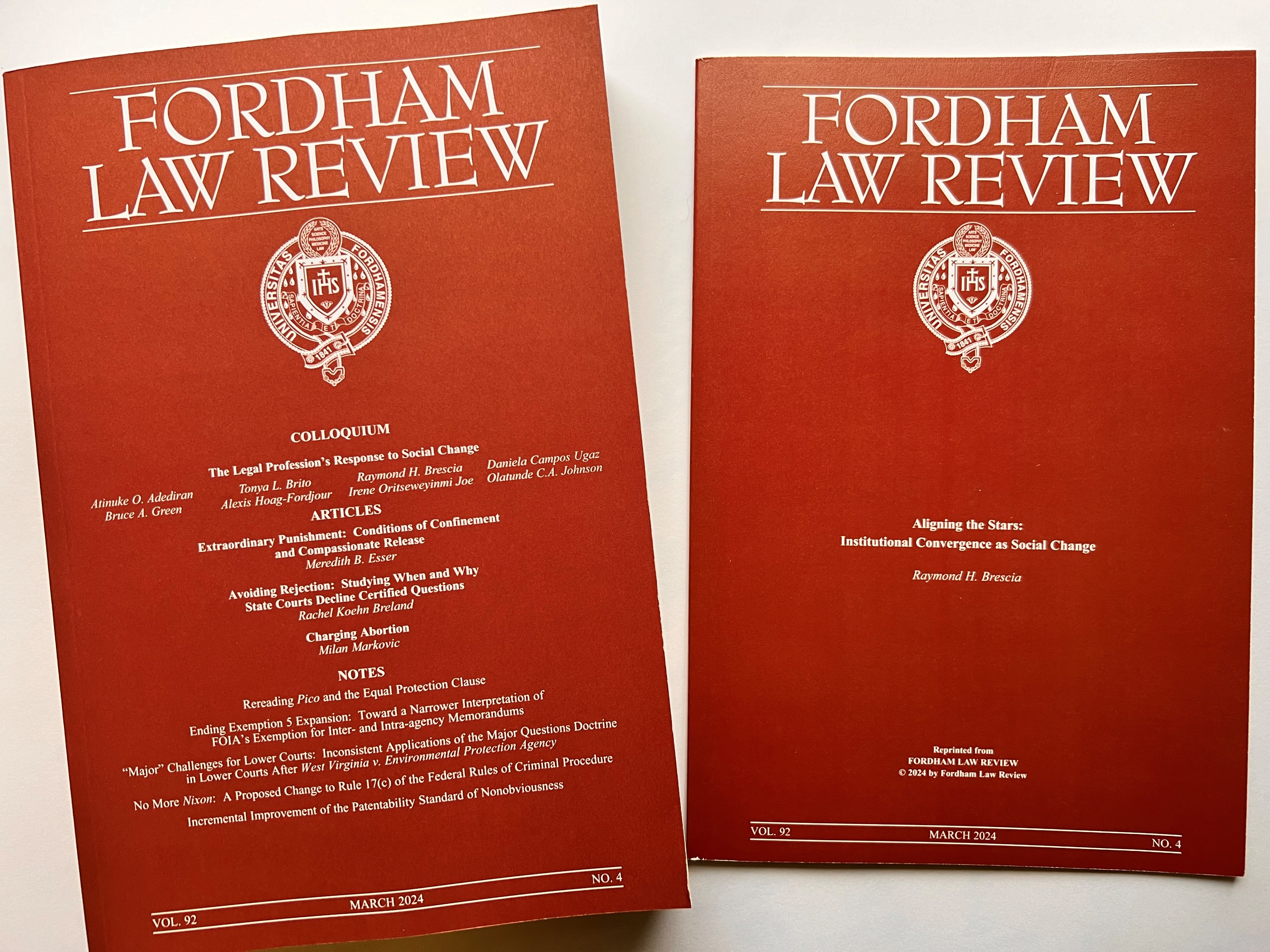
It was a thrill to contribute to this colloquium on social change hosted by the Fordham Law Review. My piece, “Aligning the Stars: Institutional Convergence as Social Change,” can be downloaded here. The abstract follows. I hope you’ll give the piece a look.
Legal scholars who study law, social movements, and social change have long attempted to recognize, understand, deconstruct, and resolve the interplay and tension between positivist views of law, realist appraisals of the functioning of courts and legislatures, the dangers of relativist and even nihilist understandings of how the law functions, and the ways in which law evolves in response to both popular and anti-democratic forces. Over the course of the last half-century or more, in many ways beginning with the Supreme Court’s decision in Brown v. Board of Education and the legislative enactments around civil rights that emerged in the decades after, legal theories have sought to explain the role that social movements have played in influencing not just legislation, but the collective understanding of the U.S. Constitution itself. This interest in the role of social movements in bringing about legal change, at the highest level of the American constitutional structure, may be at its peak. Yet those who study social movements from the sociological and political science perspectives have worked to develop a theoretics of social movements that incorporates the perspectives of scholars of organizations and institutions in the creation of an institutional perspective on social movements and the ways in which such movements—as both constructed of organizations and institutions even as they attempt to alter the organizational and institutional environment in which such movements operate—bring about social change. This Article attempts to bridge that theoretical divide by bringing a deeper theoretical, empirical and practical understanding of institutions and organizations into the study of law and social movements just as the theorists from social science and political science who study social movements have embraced the centrality of both institutions and organizations to the operation, and success, of social movements. It attempts to build on the empirical work on the success of social movements in relation to social change and legal change to uncover the institutional and organizational aspects of those successes. Building on Derrick Bell’s Interest-Convergence Theory, this Article introduces an approach, what I call “Institutional Convergence,” that seeks to build on the insights of diverse fields—sociology, political science, law, and psychology—to identify the critical role that both institutions and the individual actors that operate within them play when seeking to bring about social change. This synthesis of law and the emerging appreciation for the organizational and institutional turn in sociology and political science serves as a way to not just explain how social change happens, but to begin to construct a methodology for how to induce such change. It offers both theoretical and empirical support for this theory of change as well as a pragmatic understanding of how individuals and institutions can bring about the social change they seek.
Four Recent Books on the Present State and Future Prospects of Civil Justice in the United States
Our free, hybrid “Meet the Authors” Event at NYU Law School tomorrow, hosted by the Center on Race, Inequality and the Law has been formally approved for both Diversity, Inclusion and Elimination of Bias and Ethics and Professionalism CLE credit (see formal statement below).
When: April 4, 2024, 6:30PM-8:20PM
Where: Vanderbilt Hall, Classroom 2014, New York University School of Law, 40 Washington Square South, New York, NY 10012 (Virtual option available).
Join authors Renee Knake Jefferson, Sateesh Nori, Jane Spinak, and Ray Brescia in a conversation around critical issues facing the civil justice system in the U.S. In their recent works, these authors all explore different aspects of access to justice, racial and economic justice, and civil rights through various lenses and methodologies. They bring their own personal experiences litigating in “poor people’s courts,” historical research, and social science analysis to bear to develop innovative strategies for improving different aspects of the civil justice system, preserving and protecting critical civil rights, holding legal systems accountable for the injustices they perpetuate, and advancing human dignity. The authors’ recommendations reflect a range of ideological principles from reformist to abolitionist, but they all bring a wealth of knowledge and know-how to their work and will do so in what is sure to be a lively and provocative discussion.
CLE Statement: This program has been approved to offer New York State CLE credit. While the content of the program is appropriate for both newly appointed and experienced attorneys, only experienced attorneys are eligible to earn credit in the category of Diversity, Inclusion, & Elimination of Bias. Experienced (nontransitional) attorneys will earn one credit in the category of Diversity, Inclusion, and Elimination of Bias and one credit in the category of Ethics & Professionalism. Newly appointed (transitional) attorneys will earn one credit in the category of Ethics & Professionalism.
Over the span of 24 hours, two notable events occurred putting what I have called America’s “golf course problem” in high relief. First, the New York Times published a feature on golf courses across the nation that have “gone wild,” where environmentalists have been able to return underutilized golf courses to more democratic, accessible, sustainable use and opened them to the public, mostly by just letting them revert to a wilder, less-manicured state. Not only does this cut down on pesticides and spare millions of gallons of water, it also makes the courses themselves inclusive public parks, rather than exclusive enclaves. The second was the issuance of the court decision in the civil fraud trial against former president Trump, and several of his children and businesses, which details team Trump’s rampant fraud in its management of the golf course in Ferry Point Park in the South Bronx. Taxpayers paid over $120 million to construct the golf course there, and Trump secured a sweetheart lease from the City of New York to operate it. He then sold the management rights to a casino company that hopes to secure a license to operate a casino on the site. Justice Engoron’s decision in the civil fraud case requires Trump companies to repay the $60 million the casino developer paid for the rights to the lease (an amount that could swell to over $100 million if the developer wins a casino license). But these two events reveal that something is rotten under those rolling green hills. Not only are golf courses an environmental disaster, but they are also heavily subsidized by taxpayer dollars, and not just public courses. Many private courses also enjoy tremendous tax breaks. It’s time to rethink how we deal with America’s golf course problem. I write about the sordid history of exclusion that is the legacy of American golf courses, the environmental damage operating those courses cause, and the fact that taxpayers end up subsidizing even the most exclusive golf courses on which few average Americans will ever set foot here.
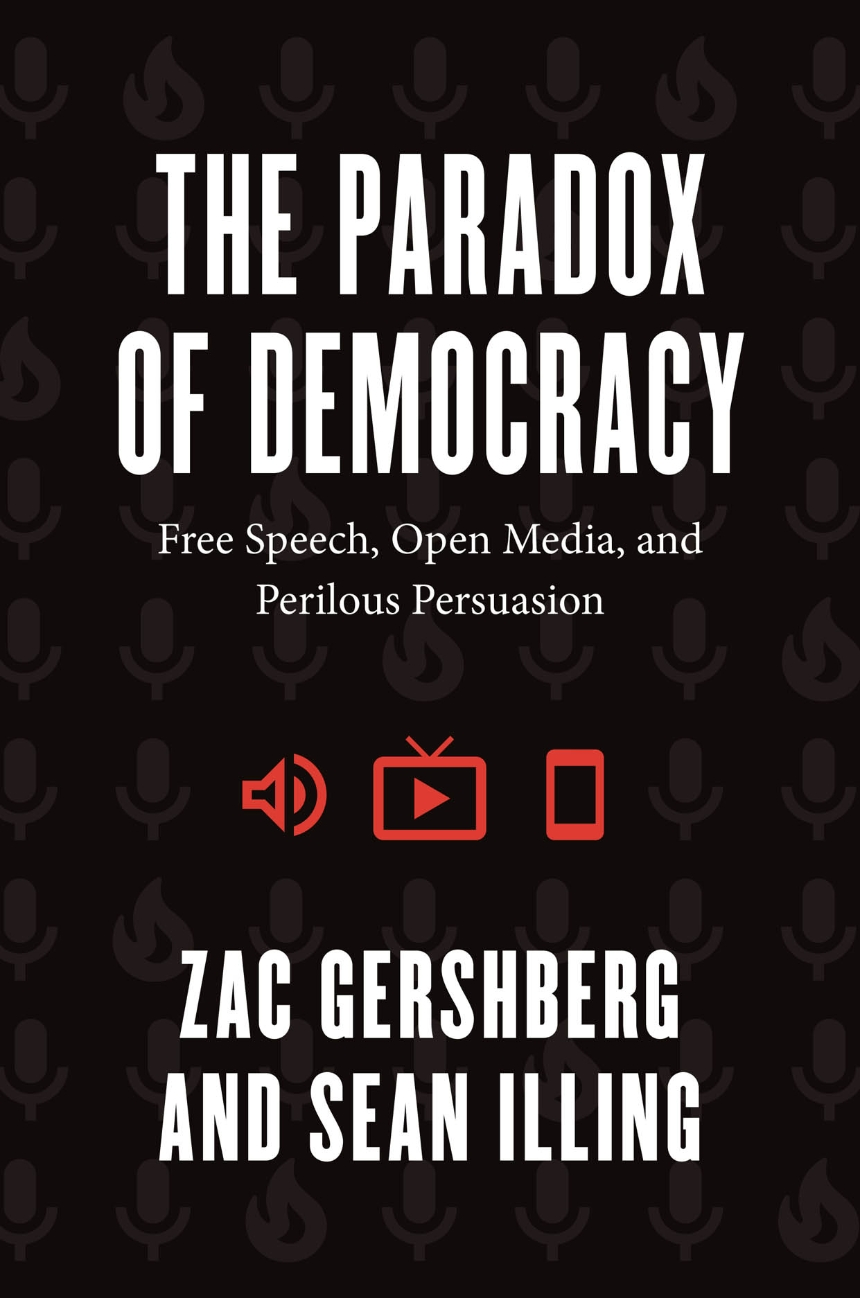
It was a great privilege to have the opportunity to review The Paradox of Democracy: Free Speech, Open Media, and Perilous Persuasion (Univ. of Chicago Press, 2022). That review is now out the Dickinson Law Review. Below is the abstract. Read the full review here and you can purchase the book here.
In The Paradox of Democracy: Free Speech, Open Media, and Perilous Persuasion, authors Zac Gershberg and Sean Illing argue that democracies contain the capacity for their own destruction because they promote open communication but such communication can be manipulated by authoritarian forces. They argue further that with contemporary communications technologies the descent into fascism is even more likely. The authors argue that in order to confront these threats, democratic nations must increase media literacy within the citizenry and strengthen local journalism. Given the grave nature of the threats the authors have exposed, these solutions do not appear up to the task of defending democracy. Indeed, a deeper analysis of The Paradox of Democracy suggests that it is not just the solutions, but the analysis itself, that leaves some stones unturned, glossed over, or completely ignored. Although the work is a useful complement to other works addressing the present threats to democracy, like some of those other works, it, too, fails to provide a complete picture of these threats or offer viable options for resisting them. When read together, however, a more complete picture of not just the threats, but also the tactics and strategies necessary to oppose them, comes into view.






 the Future of Change